Depth of Field: Change Distance Before Buying a New Lens
Background softness is influenced by more than the aperture number. Start with the arrangement of camera, subject and background.
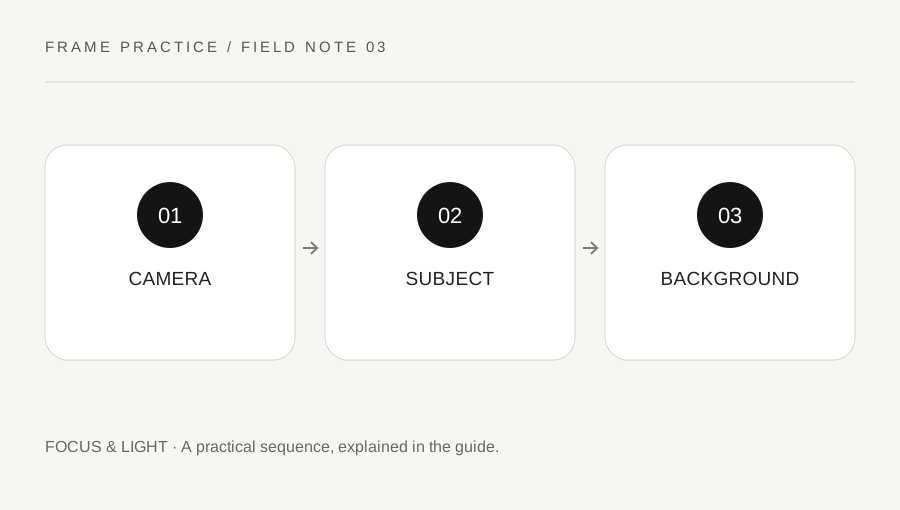
Original explanatory diagram. Numerical examples in this guide illustrate the reasoning; they are not a claim of hands-on testing.
Inspect the three distances
Notice camera-to-subject distance, subject-to-background distance and your framing. A subject standing directly against a wall gives you a different starting point from the same subject several meters in front of it. Keep the subject safely positioned and obtain permission when photographing people.
Choose a focus point on the important detail, such as the nearer eye in a simple portrait. A soft background is not useful if the main subject misses focus. Read the camera focus-mode instructions rather than assuming every automatic focus area selects what you intend.
Compare apertures without changing everything
With the camera and subject position stable, compare a wide aperture with a narrower one. Adjust exposure appropriately and inspect how the range of apparent sharpness changes. F-numbers such as f/2.8 and f/8 are illustrative; your lens may not offer the same range.
Then keep an aperture fixed and move the subject farther from the background when practical. Compare the result. Changing framing or camera position at the same time adds another variable, so write down what moved. This makes the experiment more informative than attributing every difference to the lens alone.
Check the actual subject depth
For a group photograph or a close-up object, enough depth of field matters more than maximum background blur. People on different planes or a three-dimensional product may not all fall within the sharp region at a very wide aperture.
Review the image at a useful size and inspect the important details. A phone preview can conceal a focus error. For an exercise, arrange three small objects at different distances and focus on the middle one. Compare the near, middle and far objects at two apertures. Record what is acceptably sharp for your intended output rather than declaring one setting universally best.
Compare a portrait arrangement with a group arrangement
For a simple one-person portrait, you may want the nearer eye sharp and the background soft. Place the person safely away from the background when possible, choose a suitable focus point and compare apertures. Inspect both eyes and the parts of the face that matter to your intended result.
For a group, the subjects may occupy different distances from the camera. Reusing the widest-aperture setting from the solo portrait can leave some people outside the acceptably sharp region. Consider arranging the group more thoughtfully and choosing enough depth of field for the actual positions. Do not assume the camera can make every distance sharp simply because it detects several faces.
Make a test frame and inspect the important people at a useful display size before ending the session. If the result is inadequate, change the arrangement or settings and repeat while you still have the opportunity. This practical review is more useful than discovering the problem later and assuming an editing application can recreate missing focus. Background softness is a creative choice, but the subject details you need should be part of that choice from the start.
A practical checklist
Tick items for your own use. This checklist is saved only in this browser.
Questions that come up
Will a very wide aperture make every portrait better?
No. It can reduce the sharp region so much that important details fall outside it. Match the depth of field to the subject.
Can I fix missed focus completely afterward?
Do not rely on editing to recreate detail that was not recorded clearly. Inspect important focus while you can still reshoot.
Does aperture alone determine depth of field?
No. Subject distance, focal length, framing and the way the image is viewed also affect the apparent sharp region.
References & scope
Background references checked on 18 October 2026. The examples and practice exercises are original editorial explanations, not copied procedures or professional advice.