Photograph a Small Object with a Clear Sense of Scale
A close view can show detail while making size ambiguous. Decide whether the photograph is a creative image or an explanatory record, then use a suitable reference without hiding the object.
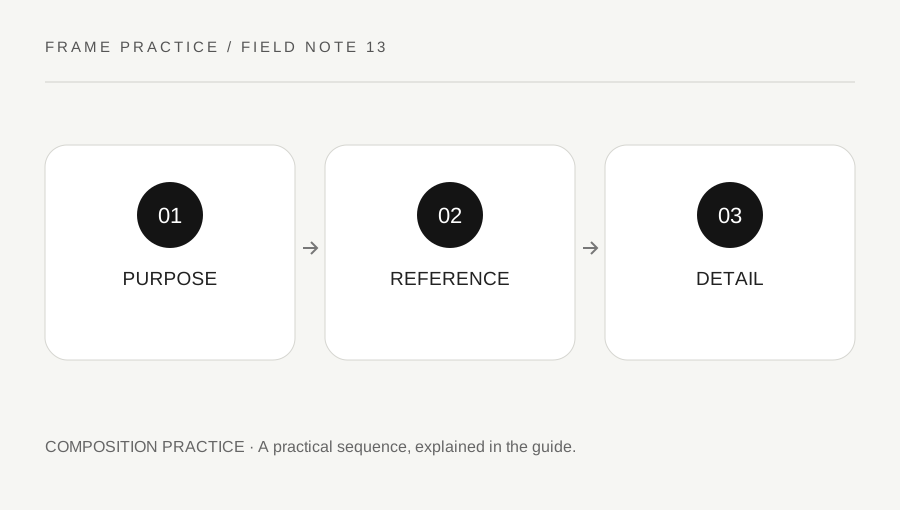
Original explanatory diagram. Examples illustrate a method or decision; they are not claims of personal testing.
Decide what the reader needs to understand
A creative close-up may intentionally remove context, while an explanatory image may need to show the object's approximate size. State the purpose before arranging the scene. A small object filling the frame does not tell a viewer whether it is a button, a bowl or something much larger. The image needs a deliberate clue if size matters.
Use an ordinary safe object for practice and respect ownership, access and handling restrictions. Do not place a fragile or hazardous item in a casual tabletop exercise. Keep the support stable and the surface suitable. The reference should help explain the object rather than create a new risk or imply a measurement you did not actually make.
Choose a reference suited to the claim
For a rough everyday sense of scale, a familiar object may help, but its actual size can vary. For a measurement-related record, use an appropriate verified reference and method rather than assuming a random coin or hand is exact. Label the image's purpose honestly. A photograph is not automatically a calibrated measurement system.
Place the reference so it does not obscure essential features or sit at a misleadingly different distance. Keep perspective in mind and avoid a dramatic angle if it defeats the explanatory task. If formal documentation is required, follow the responsible organization's procedure rather than adapting a casual creative exercise into an evidential method.
Make an object-only and context pair
Imagine a small handmade item photographed for a personal project record. The photographer makes one clean detail image and another with a suitable clearly explained reference. They keep the important features visible and compare whether the second image genuinely helps a reader understand size. They do not claim a precise dimension from an informal prop.
They also check the lens's close-focus limits. Moving closer than supported can make the image soft, and a larger on-screen object is not proof of more captured detail. Use a supported distance and inspect the actual file. This exercise concerns clear communication, not a lens test or a recommendation to buy specialized equipment.
Review focus and contextual honesty
Inspect the important surface and the reference at a useful magnification. A shallow sharp region may leave the scale clue unreadable, while a cluttered background can confuse the object's boundaries. Adjust the supported photographic plan for the actual purpose rather than judging the image solely by a pleasing blur.
Keep any crop or substantial processing understandable where the image serves as a record. Do not resize the reference separately to make the object look larger or smaller and then present it as an unchanged scene. Preserve an original where appropriate. A useful scale photograph makes the intended relationship clearer and keeps the limits of an informal image distinct from a verified measurement.
Use captions to remove avoidable ambiguity
A short caption can identify the object and state whether the reference is approximate or part of an approved measurement method. Do not add a precise number that was never measured simply because the image appears convincing. If dimensions are known through another reliable method, label that source separately. This lets the picture show appearance while the text supplies an honest size statement. Clear communication often needs both, especially when viewers see the image on screens with very different physical sizes.
A practical checklist
Choices are saved in this browser. Reset them here or clear this site’s browser storage.
Questions that come up
Can a familiar object prove an exact dimension?
Not automatically. Sizes and perspective vary. Use an appropriate verified measurement method when precision matters.
Does filling the frame prove more detail was captured?
No. Check focus and the actual file, especially near the lens’s supported close-focus limit.
Can I resize the reference separately?
Do not present that as an unchanged scale relationship in a factual record.
References & scope
Background references checked on 18 October 2026. Worked examples and diagrams are original teaching material.