Make a Silhouette by Designing the Outline
A silhouette relies on recognizable shape and separation. Choose a safe backlit arrangement, simplify overlaps and review the outline before worrying about detail inside the dark subject.
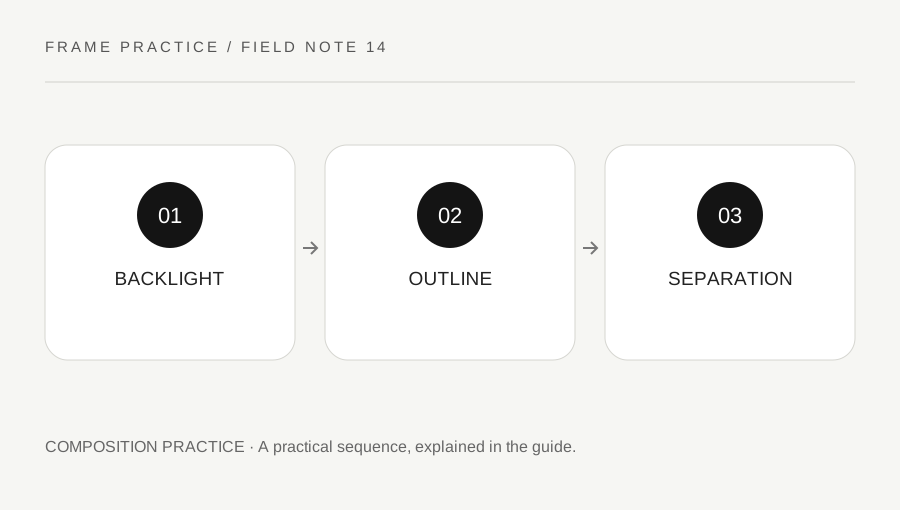
Original explanatory diagram. Examples illustrate a method or decision; they are not claims of personal testing.
Choose a safe manageable backlight
Use an ordinary object against a brighter background in a controlled setting. Do not point the camera or your eyes at the sun or another hazardous source to complete a practice exercise. A bright window with an appropriate safe arrangement can be enough to explore the idea. Keep supports stable and avoid obstructing access.
Nikon's silhouette guidance emphasizes recognizable outline and shape. Begin with an object whose outer form communicates something without relying on small surface detail. A complicated object can merge into an unreadable dark patch. The goal is not to underexpose a random scene, but to build a shape that remains clear when interior detail is intentionally reduced.
Separate the outline from nearby forms
Move the camera or object safely to reduce confusing overlaps with the background and other objects. Check small gaps and contact points around the edges. Two recognizable items can become one ambiguous shape when their outlines touch. Use the full frame rather than concentrating only on the center of the subject.
Keep the composition purposeful. A slight separation may clarify a handle, stem or profile without changing equipment. Do not add a prop merely because it produces a dramatic shadow if it distracts from the intended image. Make a simple baseline and one deliberate arrangement change so you can see what improved the shape.
Choose the exposure through the supported controls
Use the camera's appropriate metering, exposure or compensation method and inspect the actual settings. Read the model's behavior rather than copying a universal dial value. A darker subject may be intentional, while the background still needs the appearance and detail you want. Use the histogram and warnings as aids within their documented limits.
Imagine a dark object against a bright window. The first automatic image reveals more interior detail than the photographer wants. They make a supported adjustment and review the outline and background. The example does not prescribe a specific number of stops or guarantee the same result in every scene. It shows a deliberate creative goal and a checked exposure choice.
Review shape before surface detail
Look at the image small and then at a useful full view. Ask whether the subject is recognizable, whether overlaps are clear and whether the bright background supports rather than overwhelms the form. A silhouette does not need to reveal every shadow texture if that is not the purpose, but accidental blur and unintended clutter can still weaken it.
Retain the practice pair and write the one arrangement or exposure change that mattered. Do not claim that any dark subject is a successful silhouette simply because detail is absent. A useful exercise connects backlight, outline and separation to a purposeful image, with the camera left in an understood state before the next ordinary scene.
Try a second object without copying the first settings blindly
A new shape or background can change the scene's brightness and the useful viewpoint. Keep the method of observation, but reassess the actual exposure and arrangement. This tests whether you learned a process rather than memorized one number. Choose safe objects and manageable light, and avoid turning the exercise into a requirement to chase a sunset or restricted location. Clear shape can be practised at home with an honest review of the resulting frame.
A practical checklist
Choices are saved in this browser. Reset them here or clear this site’s browser storage.
Questions that come up
Does every dark subject become a successful silhouette?
No. Recognizable shape, separation and a purposeful background still matter.
Must I photograph the sun for backlight?
No. Use a safe controlled bright background and do not aim at hazardous sources for the exercise.
Can I copy one compensation value for every silhouette?
No. Reassess the scene and supported camera behavior each time.
References & scope
Background references checked on 18 October 2026. Worked examples and diagrams are original teaching material.