Use a Tripod and Supported Release Method for a Static-Subject Test
A tripod helps only when the setup is stable and appropriate for the equipment. Check attachment, positioning and the camera’s release behavior before judging the captured detail.
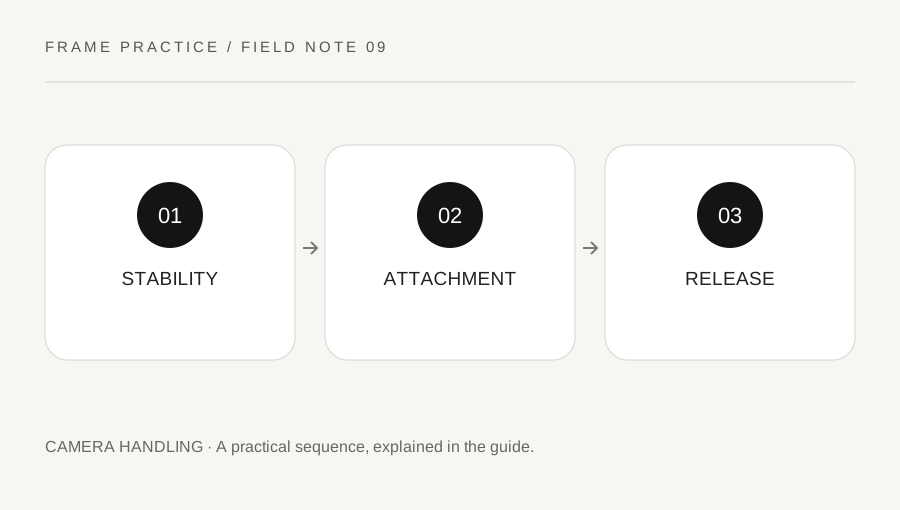
Original explanatory diagram. Examples illustrate a method or decision; they are not claims of personal testing.
Read the support and camera instructions
Check that the tripod, head and attachment are suitable for the equipment's actual load and arrangement. A capacity number is not permission to extend every part in an unstable configuration. Use the manufacturer's setup and locking instructions, and keep the camera supported while attaching it. Do not leave an expensive or heavy setup balanced on an uncertain connection.
Choose a level safe position with no legs or cables obstructing a walkway. Keep the setup attended and consider wind, vibration and other local conditions. A small indoor static-subject exercise is a useful starting point. Do not assume that a tripod makes a location safe or removes the need to respect access restrictions.
Separate support from subject movement
A stable camera cannot stop a moving subject. Choose a still object for the first comparison and keep the light manageable. Set focus and exposure deliberately, then use a supported release method such as an appropriate timer or remote if available. Read the actual camera instructions rather than applying one delay or connection method to every model.
Check stabilization guidance for the specific camera and lens when supported. Do not follow a universal instruction to disable or enable it on every tripod, because systems differ. Keep the setting in your note if it matters to the exercise. A controlled setup should identify what changed rather than combine several unfamiliar camera features at once.
Make a small release comparison
Imagine a camera aimed at a textured stationary object under ordinary indoor light. The photographer makes a supported direct-release frame and a frame using an appropriate delayed or remote release, while keeping the rest of the setup comparable. They inspect the intended detail at a useful magnification and note any difference.
They do not claim the timer always guarantees sharper images. An unstable support, subject movement or focus error can still matter. If no difference appears, that is a valid observation under those conditions. The exercise is intended to build a reliable handling routine, not a manufactured before-and-after result or a reason to buy more accessories.
Review the full setup before moving on
Inspect attachment and locks during use according to the equipment instructions. Keep the camera and lens handled safely when repositioning, and avoid carrying a mounted assembly in an unsupported way. Do not hang an improvised weight from a point that the support was not designed to use. Choose the manufacturer's intended stability methods.
After the exercise, record the release mode and restore the intended camera state for the next task. A timer left active can surprise someone expecting an immediate capture. A useful tripod habit combines safe support, known settings and actual image review. It does not turn every slow exposure into a guaranteed success or replace attention to focus, light and movement.
Keep the practice image meaningful
Use a subject with a detail you can compare, such as a printed pattern or textured surface, and keep its position unchanged. A smooth blank object may hide differences while a moving plant introduces another variable. Review the same detail in each frame and keep the original files. If the images are resized differently, record that before judging sharpness. A simple honest comparison is enough to learn a handling lesson without claiming a laboratory test of the tripod or camera.
A practical checklist
Choices are saved in this browser. Reset them here or clear this site’s browser storage.
Questions that come up
Does a tripod freeze a moving subject?
No. Subject movement still interacts with the exposure, even when the camera is stable.
Should stabilization always be off on a tripod?
Follow the exact camera and lens guidance. Do not apply a universal rule to every system.
Will a timer guarantee sharper images?
No. It is one supported release option, while stability, focus and movement still need review.
References & scope
Background references checked on 18 October 2026. Worked examples and diagrams are original teaching material.