White Balance in Mixed Light: Choose What Needs to Look Neutral
One white-balance setting cannot necessarily make different light sources look identical. Identify the main subject light, compare a few supported choices and keep creative preference separate from neutral-color accuracy.
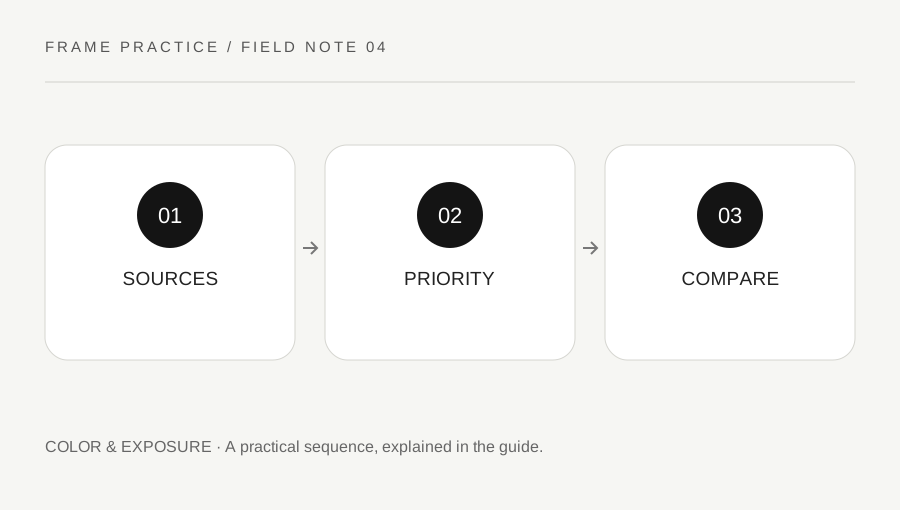
Original explanatory diagram. Examples illustrate a method or decision; they are not claims of personal testing.
Identify the light reaching the subject
Look for daylight, room lighting and other sources that illuminate different parts of the scene. A white object near a window may receive a different mixture from one beside a lamp. Record the arrangement before changing the camera setting. Do not assume the camera is faulty because one region looks warmer or cooler than another.
Read the camera's white-balance options and custom-setting procedure. Canon's manuals explain white balance in relation to the light source, but the exact controls and available settings vary. Use the actual model instructions rather than copying a menu path from an older or different camera. Keep safe handling in mind if you move a lamp or other equipment.
Decide the purpose of the color choice
If accurate product color is required, a controlled consistent light arrangement and appropriate reference workflow may matter more than selecting a pleasing preset. If the photograph is a personal creative study, a warmer or cooler appearance may be intentional. State the goal so you can assess the result against something clearer than looks different.
Do not treat any random white-looking object as a certified neutral reference. Follow a suitable custom-white-balance or color workflow if accuracy matters. Keep exposure and clipping in view too; color judgment becomes difficult when important areas lose detail. A white-balance adjustment is not a universal repair for every lighting or exposure problem.
Make a small comparison sequence
Imagine a still life lit by a window and a warm room lamp. The photographer keeps the composition and supported exposure stable while making a few white-balance variants. They compare the main subject and background separately, noting which source dominates each region. They do not claim one setting neutralizes both automatically.
If the mixed effect is unwanted, they consider a simpler safe lighting arrangement and repeat the comparison. The example is an exercise, not a prescription for a particular Kelvin value. Keep the chosen setting and light arrangement in the note so the result can be repeated without relying on memory of how warm the room felt.
Review on a suitable display and preserve the source
Check the captured files in a consistent viewing context and avoid judging exact color from an unverified screen in changing light. A display can influence perception. If a color-critical outcome is required, use the appropriate calibrated workflow and expertise rather than claiming accuracy from a quick browser preview.
Retain the source files and record any processing used. RAW and JPEG workflows offer different practical options, so follow the camera and software guidance for the chosen format. A useful white-balance exercise teaches how light sources, settings and purpose interact. It should produce an understood choice, not a promise that a single preset makes every mixed-light scene objectively correct.
Check the next scene’s setting
A deliberate fixed setting can remain active after the exercise. Before moving into another room or outdoors, inspect the white-balance state and choose the intended method for the new light. Do not assume the camera silently returned to automatic. A small capture note with the source, setting and goal can make later review easier, especially when several similar frames differ mainly in color. This preserves the learning without requiring an elaborate technical record for every casual photograph.
A practical checklist
Choices are saved in this browser. Reset them here or clear this site’s browser storage.
Questions that come up
Can one setting neutralize every mixed-light region?
Not necessarily. Different sources can affect different areas, so the lighting arrangement and intended subject matter.
Is any white object a reliable neutral reference?
Do not assume that. Use an appropriate reference and the camera’s supported procedure when accuracy matters.
Does a pleasing preview prove color accuracy?
No. Display and workflow conditions also matter, especially for color-critical work.
References & scope
Background references checked on 18 October 2026. Worked examples and diagrams are original teaching material.